

In our previous discussion, we explored how our muscles cope when the demands of exercise become exceptionally intense. ATP consumption accelerates, glycolysis kicks in, lactate helps keep the energy-generation machinery running, and eventually we finish the workout completely exhausted and perhaps left in a state of crawling on the floor.
Our muscles go through microtears and adapt to the metabolic demands of exercise, but our joints have to deal with something rather more physical: the repeated mechanical forces being imposed upon them.
Why Does Exercise Make Us Stronger? It Starts With Tiny Tears.

Not everyone enjoys the idea of working out. While many of us take part in sports to keep fit, others have to drag themselves to the gym simply to stay active.
Every squat, jump, sprint, landing and change of direction places mechanical stress on our knees, hips and ankles.
For most of us, this isn’t necessarily a problem. Our joints are remarkably good at repairing themselves. But if we were training like professional athletes and having to repeat such movements thousands of times over a professional athletic career, things start to get rather more interesting.
A basketball player can spend years doing all sorts of high speed start/stop activities like jumping and landing. A footballer can subject their knees and ankles to enormous forces over thousands of training sessions and competitive matches. A runner can accumulate an astonishing number of loading cycles through the same joints over the course of a career.
And yet, they keep going, because the consequences are only more apparent much later in life.
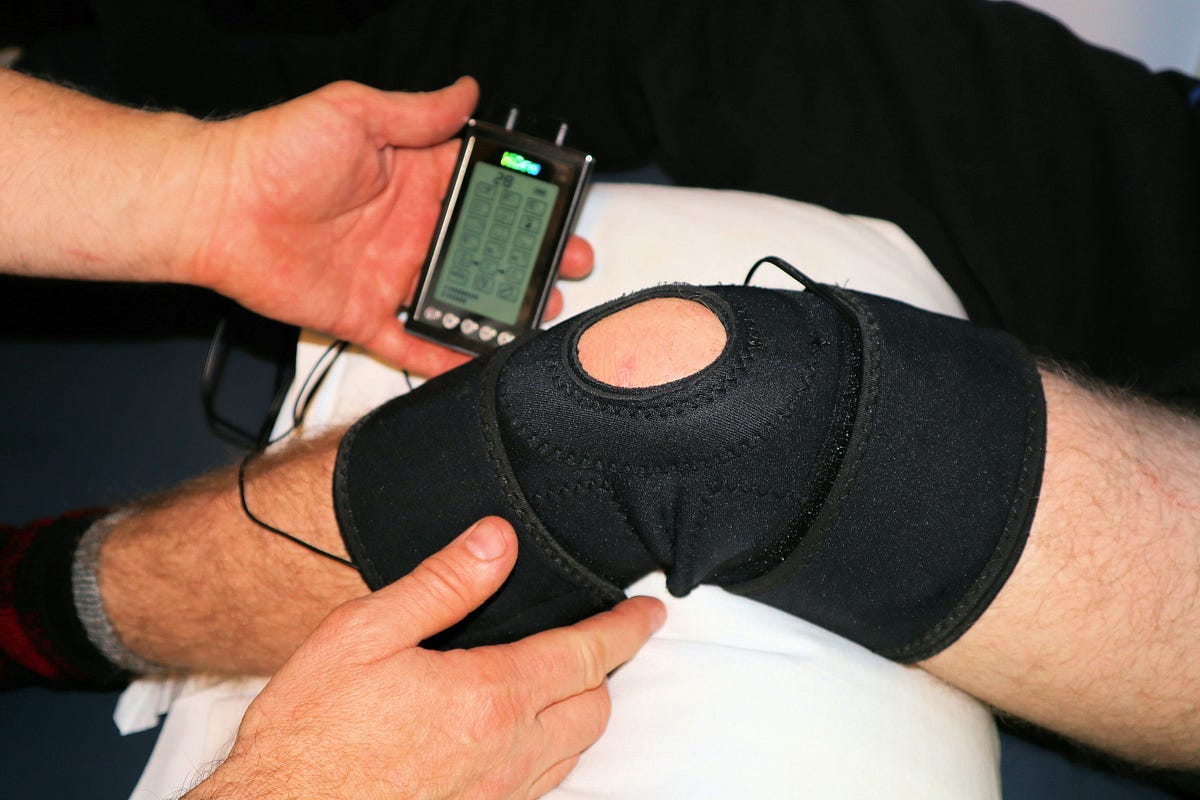
An athlete who once spent an entire game sprinting, jumping and changing direction can eventually retire with knees that seem considerably less enthusiastic about life. Knee braces, compression sleeves and other forms of support can become increasingly familiar sights among older athletes, reminding us that our joints don’t necessarily remain as cooperative as they were during our athletic prime.
So what exactly happens to our joints when we keep asking them to absorb all of that punishment? The first thing that we need to appreciate is that our joints aren’t simply pieces of cartilage being gradually worn down like the tyres on a car. Cartilage is living tissue, and it is constantly being maintained and remodelled.
There is an ongoing process of breaking down damaged components of the extracellular matrix while simultaneously synthesising new material to replace them. Cells within the joint coordinate these processes to maintain the structural integrity of the cartilage.
In other words, our joints are constantly being renovated while we’re still using them. Like any other renovation project out there, there has to be a balance between how quickly we’re tearing things down and how quickly we’re putting them back together. It’s just that our body’s cells won’t be responding to the construction crew like irate homeowners anytime soon.
Instead, they respond to mechanical stress through a complex network of biochemical signals that regulate inflammation, matrix degradation and tissue repair. These signals provide a balanced response that is extremely important to maintain.
We need to break down damaged cartilage. Old or damaged components have to be removed before new tissue can take their place. One of the groups of enzymes involved in this process is the matrix metalloproteinases (MMPs). MMPs are capable of breaking down collagen and other components of the extracellular matrix. While we may question the necessity of breaking down cartilage, it actually is an essential part of maintaining our tissues. Without some degree of matrix degradation, damaged material would simply accumulate without being properly removed.
The problem isn’t the existence of MMPs.
The problem is what happens when the destruction starts getting ahead of the rebuilding.
We can see this imbalance developing in osteoarthritis (OA), where the degradation and remodelling of cartilage progressively outpace the body’s ability to repair and replace the damaged tissue.
Joint Pain and Inflammatory Dysregulation In The Body

Osteoarthritis is a common issue that plagues most people who experience chronically painful joints that have lost a fraction of their original functions. We feel it as we age and as our bodies degenerate.
Repeated mechanical stress can contribute to irritation within the joint, which in turn can influence inflammatory signalling. Cells within the joint respond to these signals by altering their behaviour, including increasing the production of enzymes involved in extracellular-matrix degradation.
More degradation results in the damaging of more cartilage. More damaged material can generate more signalling. Sustained inflammatory signalling can further promote the processes that break down the extracellular matrix.
The result is a rather unfortunate feedback loop in which the body’s own repair and maintenance machinery begins contributing to the gradual deterioration of the joint.
This doesn’t mean that exercise itself is destroying our knees. In fact, physical activity is important for maintaining healthy muscles, bones and joints. The problem is much more complicated than simply counting how many times we’ve squatted or how many miles we’ve run.
Our bodies are constantly balancing the processes of mechanical loading, tissue damage, inflammation, degradation and repair in maintaining healthy joint cartilage.
A reasonable amount of mechanical stress can be something that our tissues adapt to. The trouble comes when the accumulated damage repeatedly exceeds our capacity to repair it, particularly when injuries, chronic irritation or inadequate recovery are thrown into the equation.
This is perhaps where professional athletes provide such an interesting case study.
Their bodies are subjected to mechanical stresses that most of us would never experience. They may also have access to some of the best physiotherapists, sports physicians, strength coaches and recovery programmes available. Yet even with all of that support, years of high-level competition can leave a legacy of joint problems.
The irony is that the same body that allowed an athlete to perform extraordinary physical feats is also subject to the same fundamental biological limitations as everyone else’s.
The construction crew still needs time to work. This is precisely why recovery matters.
When we exercise intensely, we tend to think about recovering our muscles. We worry about protein intake and getting sufficient rest. But our joints are also dealing with the mechanical consequences of everything we have just asked our bodies to do.
An occasional hard workout is unlikely to be the thing that suddenly destroys a healthy joint. The bigger concern is the cumulative effect of repeatedly stressing tissues without giving them sufficient opportunity to recover and adapt.
This becomes even more relevant as we get older. Our bodies don’t necessarily stop repairing themselves when we age. Rather, the balance between damage and repair can gradually become less favourable. The accumulation of previous injuries, mechanical stress and inflammatory activity can leave tissues increasingly vulnerable to degradation.
Eventually, the renovation project becomes harder to maintain.
The demolition crew is still working.
The builders are still working.
But the demolition crew may simply be getting a little too far ahead.
The Biochemistry Behind Collagen Synthesis In The Human Body

We do know of collagen as this structural protein in our body. It’s a protein that supports the physical structure of our skin and our joints. We can even find it in our bones. It even seals off the atherosclerotic plaques that are prevalent in heart disease patients.
And perhaps that gives us a better way to think about those familiar aching knees. It isn’t necessarily that our joints suddenly decided to give up on us. They may simply have spent decades trying to maintain a delicate balance between damage and repair, while we kept asking them to carry us, run for us, jump for us and occasionally make rather questionable decisions about how much physical suffering we were willing to subject them to.
Our bodies are remarkably good at repairing themselves.
But remarkably good isn’t the same thing as infinitely capable.
A retired athlete walking around with a knee brace isn’t just dealing with the inevitable consequence of “wear and tear.” It is more a visible result of a biological renovation project that has been running for decades. A project where the demolition crew, the construction crew, the inflammatory signalling and the mechanical stresses have all been working together to determine whether the joint can keep up.
Our muscles may be capable of adapting to the punishment. But our joints still need time to keep up with the renovations.
Do have a gander at 10 Nutrients That Support Healthy Joint Function to understand what are the components in our diet that can help to support healthy joints.
Also, do feel free to share this article and hit the “subscribe” button to get more updates about the science concepts in nutrition and health, all deconstructed nicely for your convenient perusal!